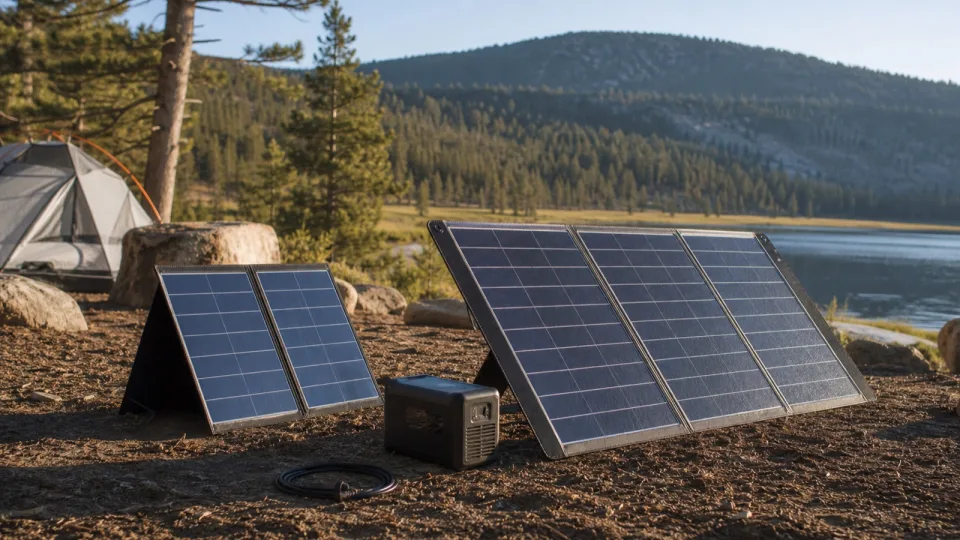
 Solar recharge
Will a 100W Solar Panel Recharge a Power Station?
Calculate how long a compatible 100W panel may take to recharge a 300Wh, 500Wh, or 1000Wh power station in your available sun.
Read guidePortable power and small solar
Free planning tools for power-station runtime, outage loads, panel compatibility, and solar recharge. The useful assumptions stay visible so you can replace them with measurements from your own equipment.

Start with the job
Each path begins with a load, runtime target, or hardware limit. That keeps the result tied to a real buying decision.
Turn battery watt-hours and a measured device load into a realistic runtime range.
Fridge and freezer backupEstimate outage runtime from running watts, compressor cycling, surge, and usable battery energy.
Panel compatibilityCompare panel voltage and current with a power station's documented solar-input limits.
Solar recharge timeCheck whether the panel, battery, input ceiling, and available sun fit the same plan.
Starlink backupEstimate battery runtime and daily recharge needs from the power draw you actually enter.
CPAP outage backupEstimate overnight runtime from your machine's draw, humidifier settings, and usable battery capacity.
Complete outage loadsBuild a load list for lights, communication, refrigeration, and other essentials before shopping.
Core buying guides
Solar rechargeCalculate how long a compatible 100W panel may take to recharge a 300Wh, 500Wh, or 1000Wh power station in your available sun.
Read guide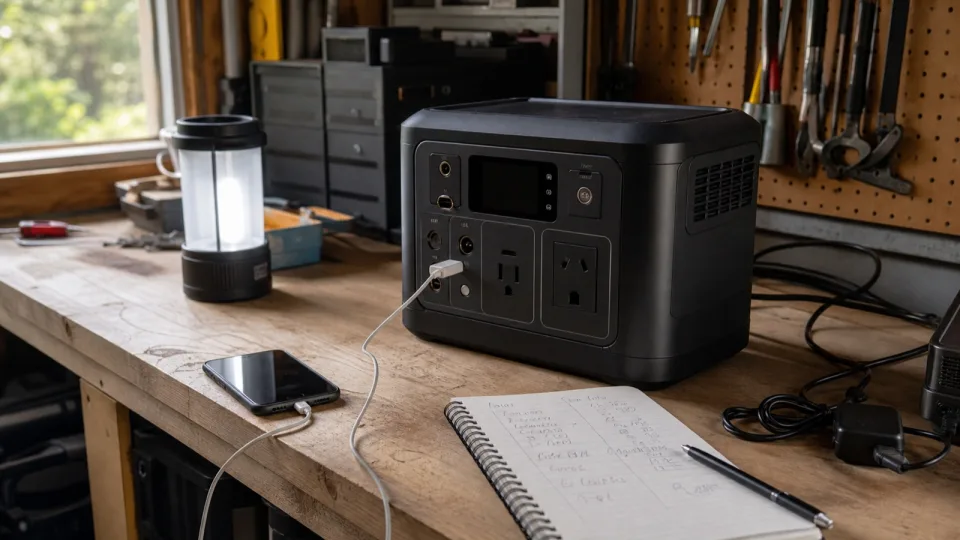 Outage backup
Size refrigerator backup from measured daily kWh or the exact EnergyGuide label, then check compressor output, reserve, recharge, and food temperature.
Read guideSolar panelsCompare 100W and 200W portable solar panels by daily energy, recharge time, input limits, portability, and the battery size you need to refill.
Read guideCPAP backupUse this four-check test to see whether a portable power station can run your exact CPAP setup for one night without relying on a vague runtime claim.
Read guideHow to use the tools
Calculator defaults are starting points. Better inputs produce a better answer, and the final hardware limits still come from the current manual.
Use a watt meter, EnergyGuide label, or current manufacturer documentation instead of a category guess.
See the formula, losses, reserve, and uncertainty instead of getting a mystery recommendation.
Check surge output, solar-input limits, connector details, and the current manual before buying.
Affiliate note: Some pages contain tagged shopping links. Calculator results do not change based on commissions.
Read the disclosure