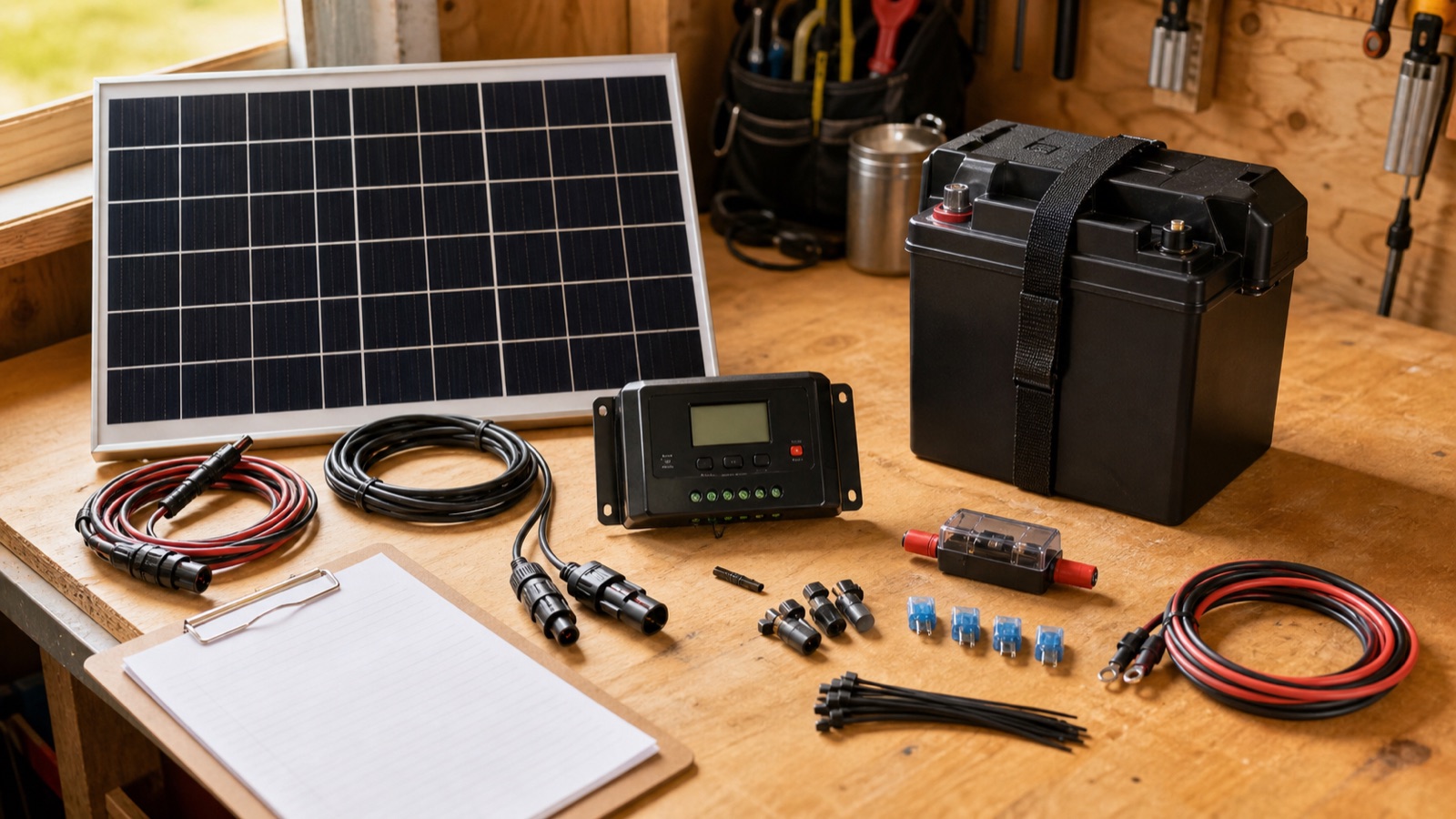
Small 12V solar kits look simple in listings, but the cheap ones often leave out the exact parts that make the setup usable. Before you buy a kit, check the whole chain: panel, controller, battery, protection, cables, connectors, and the things you plan to run.
This is a buying checklist, not installation instructions.
The five parts to check
1. Solar Panel
Look for wattage, dimensions, open-circuit voltage, connector type, and whether mounting hardware is included. A panel rating is a lab number. Real output will be lower most of the time.
2. Charge Controller
The controller needs to match the panel and the battery. Check battery chemistry support, maximum input voltage, maximum charge current, and whether it is PWM or MPPT. If the listing is vague here, slow down.
3. Battery
Battery listings can be confusing because amp-hours do not tell the whole story. Chemistry, voltage, depth of discharge, temperature limits, and built-in protection all matter. Do not mix random battery advice from one chemistry with another.
4. Fuse Protection And Wiring
Very cheap kits may include cables that are too short, too thin, or poorly described. Permanent or higher-current setups need proper protection and local guidance. Do not guess on wire size or fuse placement.
5. Loads
Write down what you actually want to run. LED lights are easy. A fan is different. An inverter adds another layer. A fridge, pump, heater, or tool can change the entire design.
Red flags in cheap kits
- No controller model number.
- No battery chemistry compatibility list.
- No wire gauge listed.
- No clear fuse or breaker details.
- Product photos show connectors that the description never names.
- The kit promises broad use cases without explaining limits.
What to buy separately
Even if a kit looks complete, you may still need mounting hardware, extra cable length, better connectors, fuses, a battery box, or a proper enclosure. Price the finished setup, not just the kit.
Verification notes
Use the solar panel data sheet, charge controller manual, and battery manual to verify charging voltage, temperature limits, current limits, and battery chemistry support. For permanent installs, follow local electrical guidance rather than a short product listing.
Claims to double-check
Be skeptical when a kit claims to be complete but does not name the controller model, wire gauge, fuse details, or battery compatibility. Those missing details are often where cheap kits get expensive.